Debangshu Banerjee
CS PhD Student @ UIUC
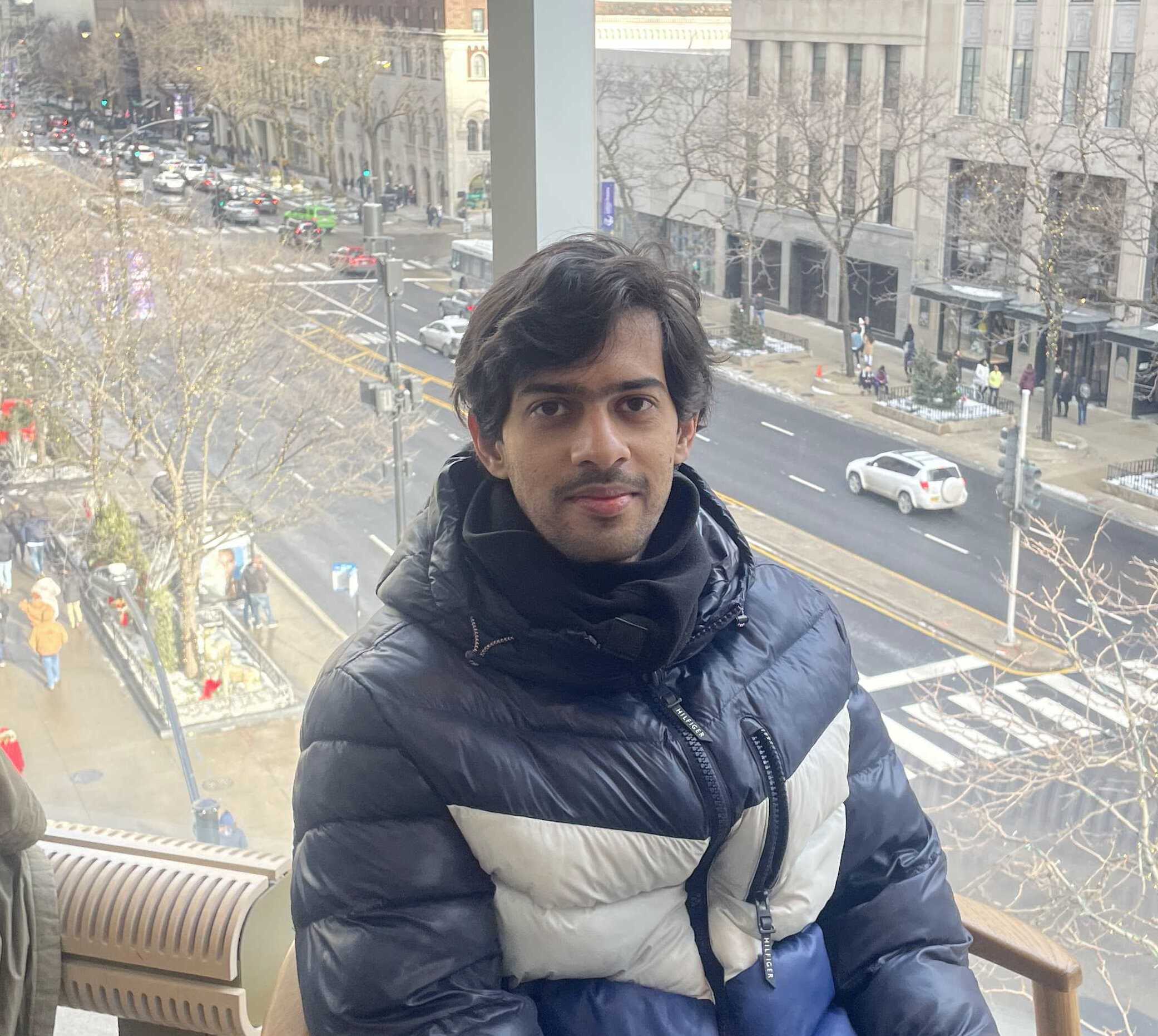
I am a 4th-year PhD student in the Computer Science department at the University of Illinois, Urbana-Champaign. I work at the intersection of machine learning and formal methods to develop next-generation programming systems with provable correctness. I am presently advised by Prof. Gagandeep Singh. My PhD is supported by the Bloomberg PhD Fellowship. Before starting my PhD, I completed my undergraduate studies at IIT Guwahati.
I currently work on self-evolving LLM agents, where a “planner” LLM automatically generates programmatic systems without explicit human supervision. My research focuses on giving users direct control over the behavior of these systems, including enforcing safety and access constraints in generated agents. On the theoretical side, I study the capabilities and limitations of LLMs in understanding code semantics. Previously, my work focused on neural network verification and certifiable training, where I developed the first scalable GPU-accelerated methods for verifying and training models with relational guarantees, such as monotonicity and robustness to universal adversarial perturbations (UAPs).
Selected Publications
- DINGODINGO: Constrained Inference for Diffusion LLMsIn The Thirty-ninth Annual Conference on Neural Information Processing Systems (NeurIPS) 2025
Affiliations & Internships
 |  | |  |
| IIT Guwahati 2016-2020 B. Tech Computer Science | Google Summer 2019 SDE Intern | Google 2020-2022 Software Engineer (L4) | UIUC 2022-Present PhD Computer Science |